Bingo Party - Lucky Bingo Game
- 4.7
- Rating
- 10.00M
- Installs
- Free
- Price
 Analysis by App-foxy
I approached Bingo Party - Lucky Bingo Game as a quick-play board game rather than as a serious replacement for an in-person bingo night. That distinction matters. The appeal is immediate: open the game, choose a bingo session, and settle into a familiar pattern of watching numbers, marking cards, and hoping the right combination appears before the other players. It is free to start, rated for Everyone, and made by Avid.ly Entertainment, so it is easy to understand why it has attracted a large audience.
My overall impression is that this is best for people who enjoy short, repeatable bingo rounds and the light casino atmosphere that comes with them. It is less convincing for anyone looking for deep strategy, a quiet offline pastime, or a board game with a strong campaign structure. The central question is not whether bingo works here—it does—but whether you want a fast digital version with multiple cards and a jackpot-focused presentation, or whether a simpler bingo app, a traditional board game, or another casual game would better match your habits.
What I would consider before choosing it
I’d weigh how much you enjoy bingo’s repeated rhythm against how much attention its multiple-card format asks from you. That distinction can help you decide whether it belongs in a regular short-break routine or is better kept as an occasional diversion. From there, I’d consider what makes a casual game worth returning to once the first-week novelty has passed.
You May Also Like

 Blood Strike: 2.5 Anniversary
Blood Strike’s Loadouts Turn Every Drop Into a Tactical Gamble
A close look at Blood Strike’s custom loadouts: how fast access to signature weapons reshapes its battle royale rhythm, rewards preparation, and narrows the gap between fights.

 Pandora - Music & Podcasts
Pandora’s Music Is Easy to Start, but Harder to Recover
Pandora’s strength is its low-effort path from a seed to a station. Its weak spot is how much confidence it asks you to place in connection, setup, and quiet recovery.

 8 Ball Pool
 Is Built on Rivalries, Rematches, and Routine
A close look at the rivalries, rematches, shared routines, and unanswered safety questions that turn a quick pool match into a persistent mobile community.

 Samsung Music
’s Quiet Strength Is Playing What You Already Own
Its reach comes less from spectacle than from dependable access to a personal library. That simplicity is both the app’s strongest retention engine and its ceiling.

 AccuWeather: Weather Radar
AccuWeather Review: A Quick, Clear Forecast for Everyday Decisions
For everyday plans, the best forecast is the one you can understand quickly. AccuWeather makes rain timing, radar, and local conditions easy to act on, with a few trade-offs.

 Hill Climb Racing
Why Hill Climb Racing Still Turns Crashes Into One More Run
A tiny car, a bumpy hill and one more upgrade: Hill Climb Racing keeps resurfacing because its simple chaos makes every near-miss feel personal.
More From Our News Desk



The basic appeal is easy to understand
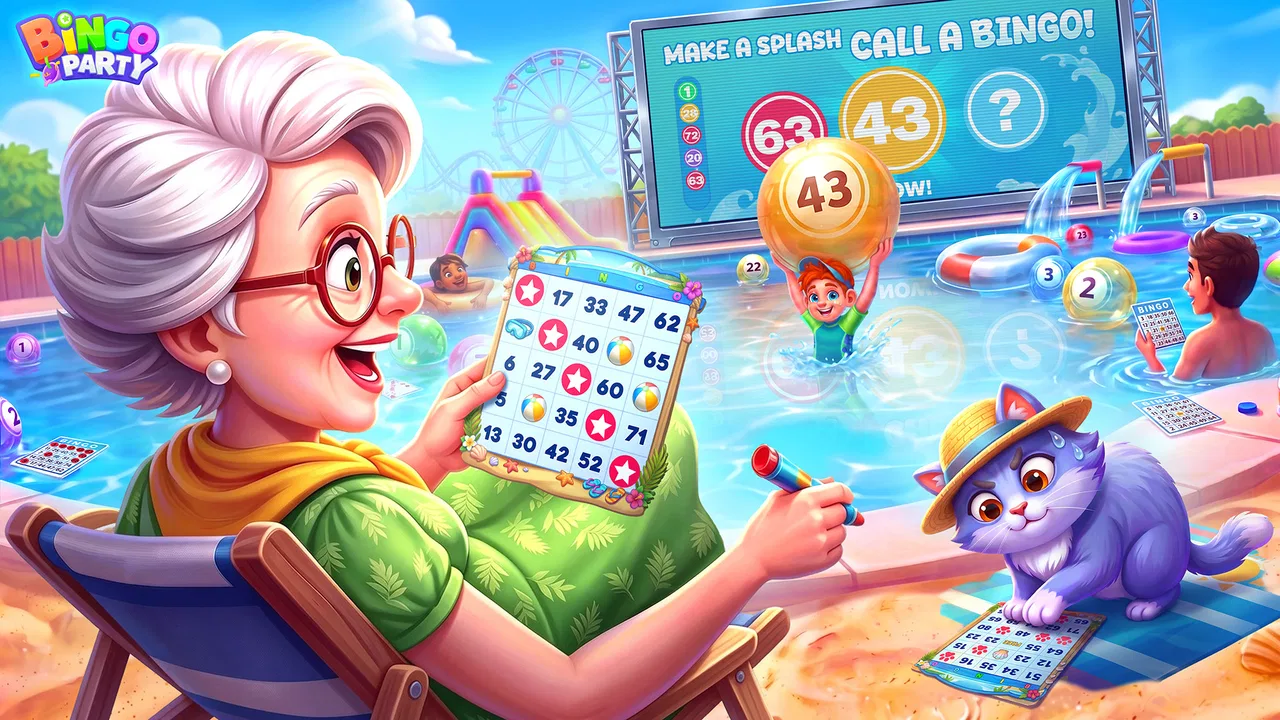
This is a board game built around bingo, with the store summary emphasizing multiple bingo cards, a large player community, jackpots, and casino-style entertainment. In practice, that combination creates a very particular rhythm. I found myself checking the board, marking possibilities, and making quick decisions about where to focus attention when several cards were active. It is more engaging than watching a single card slowly fill, but it also demands more concentration.
The game suits a short break better than a long uninterrupted session. I can imagine playing while waiting for an appointment, relaxing after dinner, or taking a few rounds during a commute when I am not the person driving. A round gives the experience a natural stopping point, which is useful for people who do not want a game that demands an hour of commitment. The format also makes it approachable for players who may not normally play mobile games.
At the same time, the familiar rules mean that the main entertainment comes from anticipation rather than from complex decision-making. Your choices matter mainly in how you manage cards and attention, while the draw itself remains the decisive event. If you need a game where clever planning consistently overcomes chance, this will probably feel limited after the novelty wears off.
Multiple cards change the way I play
The multi-card format is not just a decorative addition. It changes the task from simply waiting for numbers to actively scanning several areas at once. I found that the best approach was to settle into a steady visual routine instead of jumping randomly between cards. Checking each card in the same order helped me avoid missing a useful number when the pace became busy.
That is one of the less obvious strengths of the game: it can become a small attention exercise. I would not describe it as a strategy title, but managing several cards gives experienced players something to improve. The trade-off is that newcomers may initially find the screen more demanding than a traditional single-card bingo layout. Starting conservatively is sensible, especially if the game offers a choice about how many cards to handle in a session.
My practical tip is to prioritize clarity over ambition. Taking on more cards may look attractive because it creates more chances, but it also increases the risk of overlooking a number or losing track of which card is close to completion. Players who focus on accurate marking rather than maximum activity will likely enjoy longer sessions more.
The audience and device fit are straightforward
The game is available as a free download, with optional in-app purchases listed from $0.99 to $119.99 per item. That range is important when deciding whether it belongs on a family device or on a personal phone. A free entry point makes it easy to try, but anyone who dislikes spending pressure in casual games should decide in advance whether they will avoid purchases and stick to the free progression available to them.
It carries an Everyone content rating, which makes its general presentation suitable for a broad audience. I would still treat it as a game with a casino-inspired mood rather than as a purely educational or family tabletop experience. The jackpot language and reward-focused atmosphere may appeal to adults who enjoy that style, while parents may prefer to explain clearly that digital rewards and optional purchases are not the same as real-world winnings.
Compatibility is also fairly accessible. The current version is 3.0.3 and requires Android 5.0 or later, so it is not aimed only at recent devices. That helps people using an older Android phone, although actual comfort will still depend on screen size, responsiveness, and how easily the player can distinguish multiple cards. A larger display should make the scanning task more comfortable than a very small handset.
What the public response suggests—and what it does not
The game holds a 4.7 average from around 377 thousand ratings, with roughly 51 thousand written reviews and over 10 million installs. Those figures show that the format has found a substantial audience, and they support my impression that the game is easy to pick up. They do not mean every player will enjoy the same parts of it. Bingo fans are likely to value the familiar structure, while players who want direct control may find the chance-based design repetitive.
I would use the rating as a reason to try the game, not as a promise that it will become a long-term favorite. Casual games often depend heavily on personal tolerance for repetition, reward loops, and visual stimulation. The right test is whether one or two sessions feel relaxing and readable, rather than whether the game appears popular in isolation.
Where this game is strongest
The clearest advantage is convenience. A physical bingo set needs cards, markers, a caller, and other people willing to play. This mobile version removes that preparation and gives me a complete session whenever I have a few spare minutes. That makes it particularly useful for someone who likes bingo but rarely has a group available.
It also captures the social feeling of a busy bingo room without requiring me to organize one. The emphasis on millions of players and a substantial jackpot gives each round a sense of occasion, even though the actual interaction is still centered on the board. For me, the atmosphere works best when I want something more lively than a minimalist puzzle but less demanding than a competitive strategy game.
Another strength is the low learning barrier. Someone who already knows bingo can begin almost immediately, while a first-time player can understand the objective without studying a manual. That makes it a reasonable choice for sharing with a relative or friend who is comfortable with board games but not interested in complicated mobile controls.
Small habits that make sessions better
I would recommend treating each session as a focused activity rather than background entertainment. When I tried to divide my attention between the game and another task, the multi-card layout became less enjoyable because missed numbers are more frustrating when they result from inattention. A quiet setting and a few uninterrupted minutes make a noticeable difference.
It is also worth deciding on a personal stopping rule. Because bingo rounds are short and the next session is easy to start, it can be tempting to continue simply because the previous result was close. I found it more satisfying to stop after a planned number of rounds or after a particular goal, instead of chasing a better outcome indefinitely. This is especially useful for players who are sensitive to reward-driven game loops.
For players who choose to spend, I would keep purchases separate from the idea of winning. The listed purchase range reaches from small amounts to a very large top end, so setting a firm budget before opening the shop is more sensible than making decisions in the excitement of a near-win. The game is easiest to recommend when it remains a free casual pastime or a tightly controlled paid hobby.
Where another bingo app may be a better fit
A simpler bingo application may suit someone who wants a clean, single-card experience with fewer distractions. If your priority is readability, calm pacing, or introducing bingo to a child or older player, a less busy alternative could be more comfortable. I would choose that route for a user who becomes overwhelmed by several cards or who dislikes jackpot-centered presentation.
On the other hand, a physical bingo set remains better when the real goal is conversation. No mobile game can fully replace the shared reactions, calling, and friendly interruptions of a room full of people. If you are planning a family gathering, community activity, or party, a traditional set offers a kind of social connection that this game cannot provide on its own.
Players seeking more meaningful decisions may be happier with another board-game category altogether. A digital card battler, tactical board game, or turn-based strategy title usually offers more control over outcomes. Bingo Party is built around anticipation and luck, so it should not be judged by the standards of games where every turn creates a complex plan.
Where non-bingo games may fit better
For a daily five-minute habit, a word puzzle or compact logic game may provide more variety. Those alternatives usually reward solving ability directly, whereas bingo rewards patience, attention, and fortunate draws. I would recommend them instead to someone who wants to feel that improvement comes mainly from learning a method rather than from waiting for favorable results.
For relaxation, the choice depends on the kind of calm you prefer. Bingo Party can be soothing when the pace feels manageable, but the jackpot framing and need to monitor several cards may be stimulating rather than restful. A quiet solitaire game or a slower puzzle may be a better evening companion for players who want minimal visual pressure.
For children, the Everyone rating is reassuring, but the purchase structure still deserves adult supervision. A parent looking for a purely educational board game may prefer something with counting, spelling, or planning built into its core. This game can help a child become familiar with number patterns, but that is a side benefit rather than its main purpose.
The cost of switching from another option
Moving from physical bingo to this app is easy in terms of setup, but there is a social cost: you lose the shared table. Moving from a basic bingo app may require more adjustment because the multi-card format asks for faster scanning and the presentation may feel busier. I would give myself a few sessions before deciding, since the first attempt can be spent learning the visual rhythm rather than enjoying the game.
Switching away from this game is equally simple if the chance-based design is not working for you. There is no need to relearn a large rule system before trying a different casual board game. The main thing to consider is whether you value the familiar bingo structure enough to accept repetition. If not, changing categories is likely to solve the problem more effectively than searching for a slightly different bingo theme.
There is also a financial switching question. Because the game is free to install but includes optional purchases, I would avoid spending until I know that the basic loop holds my attention. If I have already made purchases, that should not be treated as a reason to continue playing. The better test is whether the next session feels enjoyable without needing to recover an earlier expense.
My everyday use case
Imagine having fifteen minutes before an evening appointment. I would open the game, play a focused round, and use the natural end of that round as my stopping point. I would keep the number of cards manageable, silence other notifications, and avoid making a purchase simply because a card was close to completion. In that situation, the app gives me a self-contained activity with enough tension to hold my attention but not enough complexity to require preparation.
That same scenario also shows the limitation. If I needed to stay alert for a conversation, supervise a child, or switch rapidly between tasks, the multi-card format would be a poor match. The game rewards attention, and half-playing it can make the experience feel more frustrating than relaxing.
My recommendation
I recommend Bingo Party to people who already enjoy bingo, want quick mobile rounds, and like a lively jackpot-style presentation. The free starting point, broad age rating, accessible Android requirement, and familiar rules make it easy to test. Its strongest use is as a convenient solo pastime when a physical group is unavailable.
I would skip it if you want deep strategy, guaranteed offline calm, or a game where skill clearly determines every result. I would also be cautious if optional purchases tend to make casual games less enjoyable for you. In that case, a simpler bingo app, a physical set, or a puzzle-focused board game may be the better decision.
For me, the final verdict is positive but specific: choose it for convenient, chance-driven bingo with multiple cards, not for strategic depth. A 4.7 average and more than 10 million installs show that many players connect with this formula, but the best reason to download it is personal fit. If the thought of tracking several cards and chasing a lucky finish sounds entertaining, it is worth trying. If that sounds like pressure or repetition, another category will serve you better.
FAQs for Bingo Party - Lucky Bingo Game
01What is Bingo Party - Lucky Bingo Game and how does it work?
Bingo Party - Lucky Bingo Game is an exciting mobile app that offers a virtual bingo experience with multiple themed rooms and events. Players can enjoy classic bingo gameplay with a twist, participating in real-time matches against users worldwide. The game also features power-ups, daily bonuses, and the chance to win virtual rewards.
02Is Bingo Party - Lucky Bingo Game free to play?
Yes, Bingo Party - Lucky Bingo Game is free to download and play. However, it includes in-app purchases for virtual items like power-ups and additional bingo cards. These purchases can enhance the gaming experience but are not necessary to enjoy the game. Always monitor spending if children are playing.
03What are the main features of Bingo Party - Lucky Bingo Game?
Bingo Party - Lucky Bingo Game boasts a variety of features, including themed bingo rooms, daily challenges, and seasonal events. Players can enjoy multi-card play, power-ups to boost chances of winning, and the ability to chat with friends. The game also offers regular updates with new content and features.
04Can I play Bingo Party - Lucky Bingo Game offline?
No, Bingo Party - Lucky Bingo Game requires an internet connection to play. The game features real-time multiplayer matches and live events, necessitating online connectivity. Players need to ensure they have a stable internet connection to avoid interruptions during gameplay.
05Is Bingo Party - Lucky Bingo Game suitable for children?
Bingo Party - Lucky Bingo Game is generally suitable for older children and adults. The game contains social features and optional in-app purchases, so parental guidance is recommended to monitor interactions and spending. It’s advisable to set up parental controls to manage app usage effectively.
Pros
- Engaging and vibrant graphics.
- Smooth multiplayer experience.
- Regular updates with new themes.
- Easy-to-learn interface.
- Rewarding daily bonuses.
Cons
- Contains frequent ads.
- In-app purchases can be pricey.
- Requires a stable internet connection.
- Limited offline play options.
- Can be repetitive over time.

Bingo Party - Lucky Bingo Game
Gallery